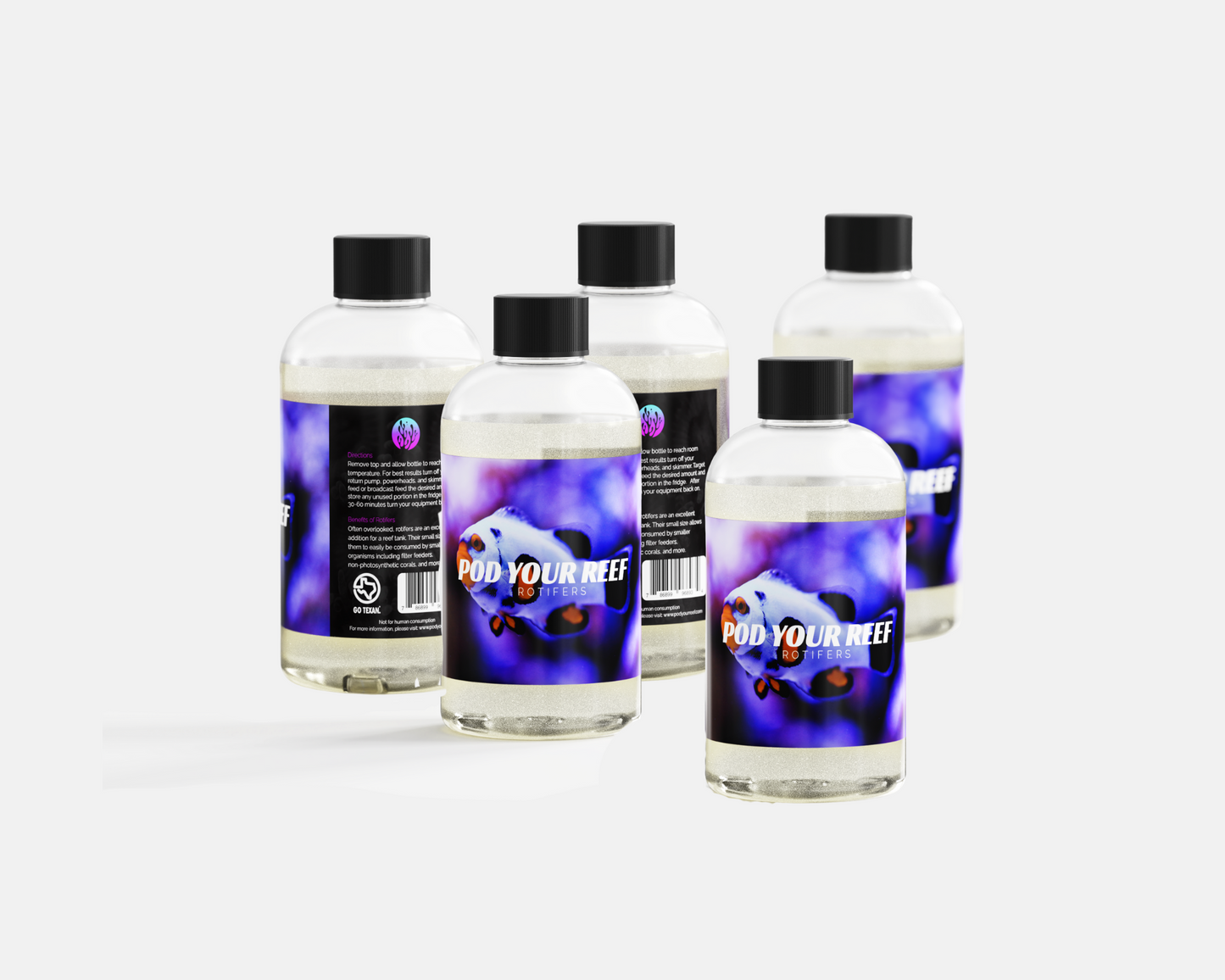
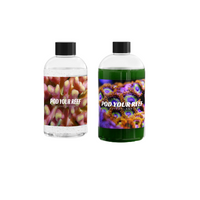

Nannochloropsis Phytoplankton Culture

Regular price $15.00
Harvested on order date
FREE UPS/FEDEX US shipping over $80.

Selling fast

Pickup available at College Station Shop

Usually ready in 24 hours

LIVE PHYTOPLANKTON / CULTURE PROFILE

THE FOUNDATION OF THE REEF FOOD WEB

A closer look at the strain, nutritional profile, and role this live culture can play in your reef food web.

CULTURED FRESH Harvested on order date
NUTRITION Rich in eicosapentaenoic fatty acid
CELL PROFILE Strong cell wall reduces foraging from ciliates
REEF ROLE Dense with microbial proteins
Nannochloropsis Phytoplankton Culture microscopy image
Nannochloropsis Phytoplankton Culture / MICROALGAE / LIVE CULTURE

MICROSCOPIC CELLS. FOUNDATIONAL NUTRITION.

Live microalgae Reef food web Cultured fresh
PROFILE

Meet the culture

Nannochloropsis is a tiny green microalga (class Eustigmatophyceae) that is one of the most widely used phytoplankton in both aquaculture and the reef hobby. It’s often nicknamed “Nanno” and is truly microscopic – cells are only about 2–5 µm in diameter. They are spherical to slightly oval, non-motile (no flagella), and usually appear as bright green dots under a microscope. Despite their minuscule size,...

Read the full culture profile ↓
WHY IT MATTERS

Nutritional profile

Nannochloropsis is often valued for its high protein content and favorable lipid profile, especially its richness in EPA (eicosapentaenoic acid). Dry weight protein can be reasonably high (some sources say ~30-50%). It contains all essential amino acids (though the proportions might not be as ideal as in Rhodomonas, for example), the big claim to fame: EPA, an essential omega-3 fatty acid. Nanno is naturally...

Explore the nutritional profile ↓
IN YOUR REEF

Best use in a reef

Nannochloropsis shines as a general-purpose phyto for feeding the base of the food web and improving water quality. One of the best uses is to feed microfauna in the tank: copepod nauplii (baby copepods) and rotifers are so small that they require tiny algae, such as Nanno, to eat. By dosing Nanno, you ensure these microscopic critters have food, which in turn lets them reproduce and become food for your fish and corals. Another major use...

See best use in a reef ↓
LIVE-FEED ROUTINE

Build from the bottom up

01Resuspend

Gently mix the live culture before use so cells are evenly distributed.

02Dose

Add according to your livestock needs and the directions provided with the culture.

03Feed the web

Support rotifers, copepods, filter feeders, and the broader plankton community.

04Keep fresh

Store and use the culture according to the product directions for best quality.

DEEP DIVE

Explore the science

Meet the culture

Nannochloropsis is a tiny green microalga (class Eustigmatophyceae) that is one of the most widely used phytoplankton in both aquaculture and the reef hobby. It’s often nicknamed “Nanno” and is truly microscopic – cells are only about 2–5 µm in diameter. They are spherical to slightly oval, non-motile (no flagella), and usually appear as bright green dots under a microscope. Despite their minuscule size, Nannochloropsis can reach extremely high concentrations in culture (billions of cells per mL), giving cultures a deep green, almost opaque look. In terms of environmental tolerance, Nanno is very hardy – it grows across a range of salinities and temperatures. It tends to dominate mixed cultures if contamination occurs, due to its fast growth. In an aquarium, Nannochloropsis stays suspended in the water column as a true plankton (it doesn’t attach to surfaces or form chains that sink), so it’s readily available to filter feeders while alive. It does not have a resting spore stage that would cause blooms on surfaces – any uneaten Nanno will remain free-floating until removed or decomposed.

Nutritional profile

Nannochloropsis is often valued for its high protein content and favorable lipid profile, especially its richness in EPA (eicosapentaenoic acid). Dry weight protein can be reasonably high (some sources say ~30-50%). It contains all essential amino acids (though the proportions might not be as ideal as in Rhodomonas, for example), the big claim to fame: EPA, an essential omega-3 fatty acid. Nanno is naturally rich in EPA, which is one reason it’s used to enrich rotifers and brine shrimp in aquaculture. On the flip side, Nannochloropsis contains virtually no DHA. This absence is why people often pair it with a DHA source, such as Isochrysis. However, its EPA content is sufficient to significantly enhance immune function, cell membrane health, and overall nutrition in marine life. It also produces some omega-6 fatty acids (like ARA) and other lipids. One characteristic of Nanno is that it has a thick cell wall composed mainly of cellulose. This wall is not digestible by many zooplankton unless broken. Now, certain filter feeders (like clams or sponges) can still extract content from Nanno, and in reef tanks, bacteria will degrade those walls over time, releasing nutrients. However, the hardy cell wall is a double-edged sword: it provides Nanno with stability and a long shelf life, yet can reduce immediate digestibility for some animals.
Many hobbyists mitigate this by using Nanno primarily to feed the smallest creatures (rotifers, copepod nauplii, etc.) or by relying on indirect feeding (fish eats pod that ate Nanno). Pigments: Nannochloropsis has chlorophyll a (but notably no chlorophyll b, since it’s not a chlorophyte but a eustigmatophyte). It also contains unique xanthophylls, such as violaxanthin and vaucheriaxanthin. These contribute to its vivid green color. Additionally, Nanno is known to have carotenoids such as astaxanthin, canthaxanthin, and zeaxanthin in smaller quantities. These are pigment antioxidants that can enhance animal coloration. For example, astaxanthin is the red or orange pigment that, when passed up the food chain, helps give fish and shrimp their characteristic colors. Indeed, the rich green of Nanno signals lots of chlorophyll and carotenoids, which herbivores can use. Nanno also contains beneficial polysaccharides – studies mention immune-boosting polysaccharides in Nanno that can benefit larval animals and possibly aquarium fauna by supporting gut health. It’s like a little packet of algal fiber and prebiotics in addition to the macros. Vitamins & minerals: Nanno synthesizes various vitamins (such as B1, B2, B12, and E) and can concentrate trace minerals (like iron, zinc, and iodine) from the water. These micronutrients then become available to whatever consumes the Nanno. One notable mineral: Nanno can carry some phosphorus in an organic form and a small amount of nitrogen; when animals digest it, they obtain these nutrients. Overall, nutritionally, Nannochloropsis is a foundation feed; it’s not the absolute best in any single category (except maybe EPA content). Still, it’s good across the board: lots of protein, good fatty acids (EPA), high chlorophyll, and some carotenoids, plus vitamins. It’s often termed the “bread and butter” phyto, forming the bulk base of many diets (with other phyto adding the “extras” like DHA or phycoerythrin).

Best use in a reef

Nannochloropsis shines as a general-purpose phyto for feeding the base of the food web and improving water quality. One of the best uses is to feed microfauna in the tank: copepod nauplii (baby copepods) and rotifers are so small that they require tiny algae, such as Nanno, to eat. By dosing Nanno, you ensure these microscopic critters have food, which in turn lets them reproduce and become food for your fish and corals. Another major use case: feeding filter feeders with extremely fine filtration mechanisms. Examples include sponges, tunicates (also known as sea squirts), bryozoans, and small feather duster worms, which often require ultra-fine suspended food. Nanno’s ~2–5 µm cells can be captured by even the finest branchial filters. Many small-polyped soft corals (like certain encrusting soft corals, or gorgonians with tiny polyps) can utilize Nanno because of its size. Aquarists also use Nannochloropsis to maintain a constant plankton presence, a technique often referred to as the “greenwater” method. For instance, when raising fish larvae like clownfish, breeders add Nanno to the larval tank to keep the water slightly green. This serves multiple purposes: it feeds the rotifers in the tank, slightly dims light (reducing stress for larvae), and helps stabilize water chemistry by uptaking waste. In a display reef, you can mimic a mild greenwater effect by dosing Nanno daily; you likely won’t see green water (as the density is not that high), but you’ll have a constant infusion of plankton. Water quality improvement is another big role: Nannochloropsis can significantly reduce nitrates and phosphates in a tank by assimilating them during growth. It’s been documented that adding live Nanno often coincides with declines in nuisance algae, because the Nanno outcompetes them for nutrients. Hobbyists have reported that dosing Nanno led to clearer water and less film algae on glass, likely because Nanno is grabbing those nutrients and staying waterborne (not coating surfaces). Direct coral feeding: There is some debate about how much Nanno directly feeds corals (especially larger polyp ones) given its small size and tough wall. However, many reefers anecdotally see better SPS polyp extension and coloration when dosing Nanno regularly. Possibly the corals ingest some portion of it, or maybe they benefit from the increased microfauna it spurs (like bacteria or pods that corals then eat). Tridacna clams definitely consume Nanno – in fact, along with Isochrysis, Nanno is commonly used in clam farming. So if you have clams or oysters in your tank, Nanno is a must in their diet. Another scenario: if you have a new tank or one with sterile conditions, dosing Nanno can help establish a natural food web. It seeds beneficial plankton and competes against uglies like dinoflagellates (some dinos starve when good phyto is present due to competition). Nanno’s ease of use also makes it good for continuous dosing systems (some advanced reefers drip live phyto via dosing pumps to maintain constant plankton levels – Nanno is ideal due to long shelf life and stability). In summary, the best use of Nannochloropsis is as the foundation of your live feeding program: it feeds the smallest critters, which feed the larger ones, it keeps water chemistry stable, and it serves as a safe, natural algal nutrient export. If you’re unsure which phyto to start with, Nanno is usually the answer because of its broad benefits and forgiving nature.

Product specs & details

Nannochloropsis is a very important species of phytoplankton, as it has a high protein content and lipid composition which essential for the health of your reef. Phytoplankton is the foundation of the food chain for marine life.  

  • Package size: 16 oz
  • Cell size: 2.73 ± 0.13 μm
  • Max Density: 4.7 g∙L-1
  • 100% Aquacultured

Diet Advantage: Long fatty acid chain, including eicosapentaenoic acid (EPA) and docosahexaenoic acid (DHA). Omega-3 (ω-3) fatty acids are essential components of marine species health. 

Reef Advantage: Live microalgae culture, provides a natural source of food for corals, clams, filter feeders, copepods, and other zooplankton. 

    COMPARE THE LINEUP

    Explore the phyto lineup

    Compare the cultures side by side, then choose the one that best fits the feeding strategy and biodiversity goals of your reef.

    Current Nannochloropsis Phytoplankton Culture

    Nannochloropsis

    Rich in eicosapentaenoic fatty acid

    $15.00
    Tetraselmis chui Phytoplankton

    Tetraselmis chui

    Motile and can remain in the water column

    $20.00
    Isochrysis galbana Phytoplankton

    Isochrysis galbana

    High yields of polyunsaturated fatty acids

    $20.00
    Rhodomonas Phytoplankton

    Rhodomonas

    Rejuvenates and intensifies color

    $35.00
    Chaetoceros Diatom Phytoplankton

    Chaetoceros Diatom

    Rejuvenates and intensifies color

    $30.00
    Phaeodactylum tricornutum Phytoplankton

    Phaeodactylum tricornutum

    Beneficial marine diatom

    $30.00
    REEF KEEPERS, VERIFIED

    WHAT HOBBYISTS ARE SAYING

    Real feedback from reef keepers using Pod Your Reef live cultures in working reef systems.
    How do I store live phytoplankton from Pod Your Reef, and how long will it last?
    How often and how should I dose live phytoplankton in my reef tank?