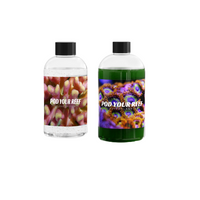
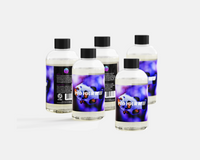

Sold out

Rhodomonas Phytoplankton

Regular price $35.00
Harvested on order date
FREE UPS/FEDEX US shipping over $80.

Back in soon

Pickup currently unavailable

LIVE PHYTOPLANKTON / CULTURE PROFILE

THE FOUNDATION OF THE REEF FOOD WEB

A closer look at the strain, nutritional profile, and role this live culture can play in your reef food web.

CULTURED FRESH Harvested on order date
NUTRITION Rejuvenates and intensifies color
CELL PROFILE Aids in development of zooplankton
REEF ROLE Increases survival rate of zooplankton
Rhodomonas Phytoplankton microscopy image
Rhodomonas Phytoplankton / MICROALGAE / LIVE CULTURE

MICROSCOPIC CELLS. FOUNDATIONAL NUTRITION.

Live microalgae Reef food web Cultured fresh
PROFILE

Meet the culture

Rhodomonas is a genus of cryptomonad algae, often referred to as “red phyto” due to its distinct reddish-brown coloration. The species offered (commonly Rhodomonas salina) is a free-swimming unicell about 9–20 µm in size. Rhodomonas has two flagella and a characteristic jerky, motile behavior – it doesn’t zip around like a fast flagellate. Still, it can make quick movements and reorient itself in the...

Read the full culture profile ↓
WHY IT MATTERS

Nutritional profile

Rhodomonas stands out as a protein-packed and fat-rich microalga with a spectrum of unique pigments. It’s often noted that Rhodomonas has both high protein (on par with green algae, such as Tetraselmis or Nannochloropsis) and high essential fatty acids (like those found in brown algae). This means it doesn’t force a trade-off between protein and fat – you get plenty of both. Specifically, Rhodomonas...

Explore the nutritional profile ↓
IN YOUR REEF

Best use in a reef

Rhodomonas is arguably the ultimate food source for coral and zooplankton, especially for finicky or high-value species. One of the best uses is feeding non-photosynthetic (NPS) corals and small-polyped corals that require frequent feeding. Corals such as sun corals (Tubastraea), gorgonians (e.g., Menella, Diodogorgia), carnation corals (Dendronephthya), and other filter-feeding polyps often respond dramatically to Rhodomonas – it’s an excellent daily feed for keeping these otherwise difficult corals thriving. Many reef keepers report that dosing Rhodomonas...

See best use in a reef ↓
LIVE-FEED ROUTINE

Build from the bottom up

01Resuspend

Gently mix the live culture before use so cells are evenly distributed.

02Dose

Add according to your livestock needs and the directions provided with the culture.

03Feed the web

Support rotifers, copepods, filter feeders, and the broader plankton community.

04Keep fresh

Store and use the culture according to the product directions for best quality.

DEEP DIVE

Explore the science

Meet the culture

Rhodomonas is a genus of cryptomonad algae, often referred to as “red phyto” due to its distinct reddish-brown coloration. The species offered (commonly Rhodomonas salina) is a free-swimming unicell about 9–20 µm in size. Rhodomonas has two flagella and a characteristic jerky, motile behavior – it doesn’t zip around like a fast flagellate. Still, it can make quick movements and reorient itself in the water (helpful in staying suspended). Under reef tank lighting, it often appears brick-red or rust-colored, especially in dense cultures, due to its high content of red pigments. One key pigment is phycoerythrin, which is a red fluorescent protein complex unique to certain algae. This cryptophyte thrives in full-strength seawater and is actually quite happy under blue-heavy reef light spectra, meaning if it’s dosed into an aquarium, it can survive and continue photosynthesizing for a while under typical aquarium LEDs. It also tolerates normal reef temperatures well (mid-70s to low 80s °F). Rhodomonas does not form tough cysts or spores in aquaria; it remains available as living cells until consumed. It is 100% aquacultured and is somewhat less common in the hobby, making it a special addition to feeding regimens (often, only specialty live phyto providers carry it). Historically, Rhodomonas was domesticated as a feed to enrich brine shrimp and copepods due to its superior nutritional value. In a reef context, it’s highly prized for feeding corals and delicate filter feeders that require a rich and easily digestible food. Summing up, Rhodomonas is a motile, medium-sized red algae that brings a unique pigment punch and robust nutrition to your reef

Nutritional profile

Rhodomonas stands out as a protein-packed and fat-rich microalga with a spectrum of unique pigments. It’s often noted that Rhodomonas has both high protein (on par with green algae, such as Tetraselmis or Nannochloropsis) and high essential fatty acids (like those found in brown algae). This means it doesn’t force a trade-off between protein and fat – you get plenty of both. Specifically, Rhodomonas produces the “golden trio” of PUFAs: EPA, DHA, and ARA (arachidonic acid). So in terms of fatty acids, it’s very complete: EPA for anti-inflammatory needs, DHA for neural development, and ARA for cellular signaling. The absolute levels of these can vary with culture conditions, but generally Rhodomonas is considered rich in Omega-3s, rivaling Isochrysis for DHA content while also providing EPA. It’s often regarded as one of the most nutritious live feeds for copepods for this reason.

Now, the signature feature: phycoerythrin – a red phycobiliprotein pigment. Phycoerythrin allows Rhodomonas to capture green light that chlorophyll doesn’t use effectively, and it gives the alga its red hue. This pigment is an antioxidant; when animals ingest it, phycoerythrin can help quench free radicals (reducing oxidative stress). There’s even speculation and research that phycoerythrin can influence coral larvae settlement and coral coloration – corals naturally incorporate pigments from their diet, and phycoerythrin could enhance reds/oranges in their tissue. Additionally, Rhodomonas contains other pigments, including chlorophyll a and c (for photosynthesis) and carotenoids such as alloxanthin and crocoxanthin. These offer their own antioxidant benefits. On the micronutrient side, cryptomonads like Rhodomonas produce vitamins (including likely B-vitamins, C, etc.) and can accumulate minerals from the water, passing them up the food chain. Another aspect: Rhodomonas has no cellulose or silica heavy wall – its cell covering is mainly a plasma membrane and an internal periplast. So it’s very easily digestible, with no hard parts to excrete. This makes its nutrients highly bioavailable. In summary, nutritionally, Rhodomonas is like giving your reef a mix of high-quality marine steak (protein), fish oil (EPA/DHA), and a multivitamin with extra antioxidants (phycoerythrin, carotenoids). It’s one of the reasons it’s called the “lifeblood of the sea” in some literature – it’s that rich.

Best use in a reef

Rhodomonas is arguably the ultimate food source for coral and zooplankton, especially for finicky or high-value species. One of the best uses is feeding non-photosynthetic (NPS) corals and small-polyped corals that require frequent feeding. Corals such as sun corals (Tubastraea), gorgonians (e.g., Menella, Diodogorgia), carnation corals (Dendronephthya), and other filter-feeding polyps often respond dramatically to Rhodomonas – it’s an excellent daily feed for keeping these otherwise difficult corals thriving. Many reef keepers report that dosing Rhodomonas causes a swift feeding response: corals will extend their polyps or mucous nets soon after it’s introduced. This makes sense given its high content of attractants (amino acids, etc.). Another key use is as a copepod superfood. If you are trying to culture copepods (e.g., Tisbe, Apocyclops, Tigriopus) or simply boost your tank’s pod population, Rhodomonas is one of the best feeds: it not only makes pods multiply, but it “gut-loads” them with fatty acids and red pigments. Copepods raised on Rhodomonas have higher nutritional value (they literally turn a reddish color from the phycoerythrin load). Feeding these enriched pods to fish like mandarins, scooter blennies, seahorses, and anthias greatly improves those fish’s health and coloration. In fact, aquaculture studies have found that Rhodomonas is superior for rearing certain copepods and shellfish larvae, thereby improving survival and growth. So, in a reef tank, adding Rhodomonas indirectly “fattens up” the entire food web – pods become more nutritious, which then benefits fish and corals that eat the pods. Rhodomonas is also fantastic for SPS corals (e.g., Acropora, Montipora). These corals have small polyps capable of capturing particles of ~10 µm, and they will incorporate the extra protein and pigments into their tissues, potentially enhancing their color. Clams and filter feeders: Rhodomonas’s cell size (~10 µm) is well within what clams (even small Maxima clams) can filter. Clams fed a mix including Rhodomonas show better growth, likely due to the broad nutrition. Similarly, feather duster worms, basket stars, tunicates, and sponges all feed on phytoplankton in that size range. Sponges, for instance, often consume a lot of microbial-sized particles; Rhodomonas might be on the upper end of sponge food size, but many sponges can take up 5–15 µm particles, and they would benefit from the rich nutrients. Another great use: reef aquariums aiming for vibrant coloration – because Rhodomonas carries pigments that can be directly or indirectly incorporated, regular dosing can help enhance reds, oranges, and pinks in corals and even invertebrates (for example, some shrimp or fan worms might display better color if their diet includes carotenoids and phycoerythrin). Larval aquatic animals: If someone is rearing larval shrimp, fish, or corals, Rhodomonas can be an important feed at certain stages (commonly used for bivalve larvae and some fish larvae in research). One more practical use case: if your tank has a deep sand bed or refugium with micro fauna, adding Rhodomonas can feed the myriad of small life (micro brittle stars, worm larvae, crustacean larvae) that spawn or reside there, increasing overall biodiversity. Overall, use Rhodomonas whenever you want to maximize the nutritional density of feedings – it’s especially beneficial for demanding filter feeders, breeding projects, and to support any reef where standard foods aren’t cutting it for some inhabitants.

Product specs & details

Rhodomonas is a very important species of phytoplankton, used to enrich zooplankton to ensure overall health and high reproduction rates for copepods. 

  • Package size: 16 oz
  • 100% Aquacultured

Shipping: Live Guarantee only valid with next day shipping. 

Diet Advantage: Long fatty acid chain, including eicosapentaenoic acid (EPA) and docosahexaenoic acid (DHA). Omega-3 (ω-3) fatty acids are essential components of marine species health. 

Reef Advantage: Live microalgae culture, provides a natural source of food for corals, clams, filter feeders, copepods, and other zooplankton. 

    COMPARE THE LINEUP

    Explore the phyto lineup

    Compare the cultures side by side, then choose the one that best fits the feeding strategy and biodiversity goals of your reef.

    Nannochloropsis Phytoplankton Culture

    Nannochloropsis

    Rich in eicosapentaenoic fatty acid

    $15.00
    Tetraselmis chui Phytoplankton

    Tetraselmis chui

    Motile and can remain in the water column

    $20.00
    Isochrysis galbana Phytoplankton

    Isochrysis galbana

    High yields of polyunsaturated fatty acids

    $20.00
    Current Rhodomonas Phytoplankton

    Rhodomonas

    Rejuvenates and intensifies color

    $35.00
    Chaetoceros Diatom Phytoplankton

    Chaetoceros Diatom

    Rejuvenates and intensifies color

    $30.00
    Phaeodactylum tricornutum Phytoplankton

    Phaeodactylum tricornutum

    Beneficial marine diatom

    $30.00
    REEF KEEPERS, VERIFIED

    WHAT HOBBYISTS ARE SAYING

    Real feedback from reef keepers using Pod Your Reef live cultures in working reef systems.
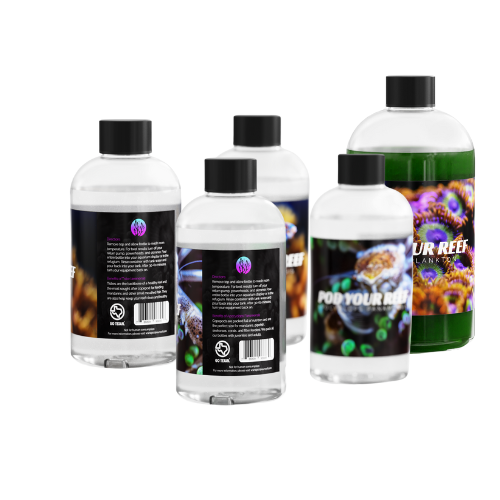
    How do I store live phytoplankton from Pod Your Reef, and how long will it last?
    How often and how should I dose live phytoplankton in my reef tank?