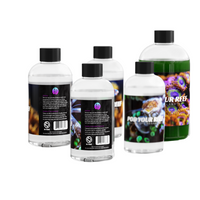
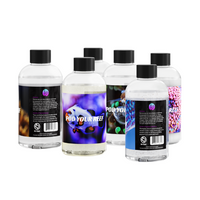
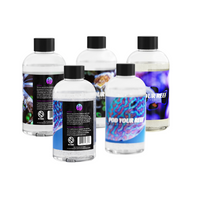
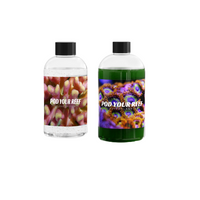
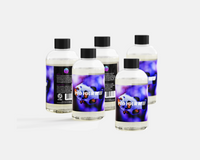


You have a bottle of live phytoplankton and a reef full of possible consumers. The question is how much to add without turning feeding into guesswork. Start with the directions for your particular culture, calculate the amount from the water actually in your system, and adjust a measured routine using observations and water tests. A dose borrowed from another bottle is not automatically equivalent.
This guide explains how to build that routine, what the numbers mean and which changes deserve attention. It applies to feeding a display reef or refugium. A separate rotifer, copepod or larval-rearing culture needs its own protocol.
How much phytoplankton should you dose?
The useful starting point is a product-specific amount and frequency, not one universal number for every phytoplankton bottle. Check the culture name, instructions and storage history before calculating a dose. If the bottle and a general website guide disagree, ask which directions apply to that bottle.
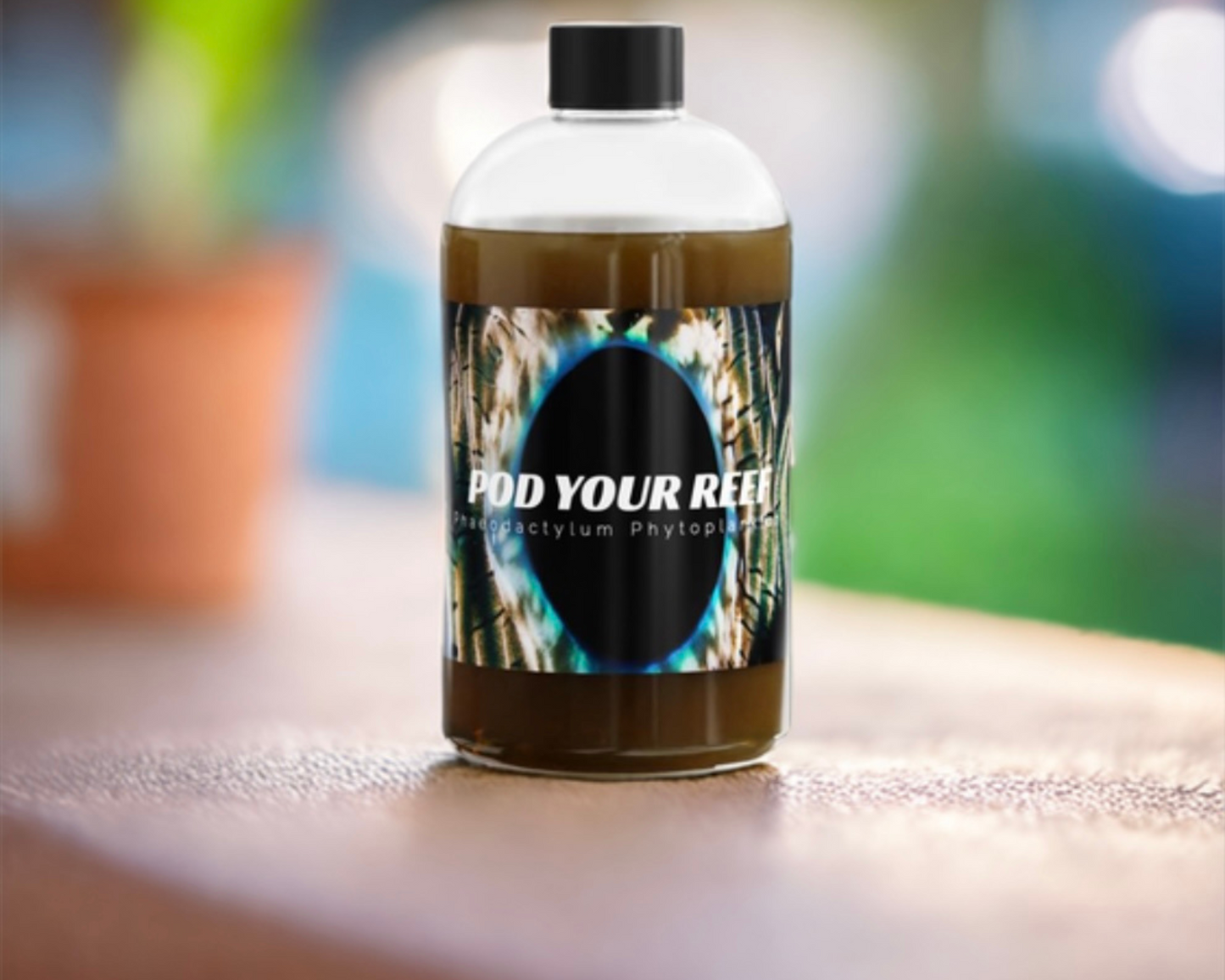
For Pod Your Reef phytoplankton, start with 0.5 mL per gallon of operating water volume, twice a week. Our feeding FAQ describes beginning with half of its 1 mL-per-gallon reference dose and increasing frequency according to the tank’s demand. Treat this as a starting routine, not a requirement to work up to daily feeding.
Starting amount per feeding = operating water volume in US gallons × 0.5 mL.
| Estimated operating water volume | Starting amount per feeding | Starting frequency |
|---|---|---|
| 10 US gal | 5 mL | Twice weekly |
| 25 US gal | 12.5 mL | Twice weekly |
| 50 US gal | 25 mL | Twice weekly |
| 100 US gal | 50 mL | Twice weekly |
For example, if your display and connected sump contain an estimated 60 gallons of water in operation, the starting calculation is 60 × 0.5 = 30 mL per feeding, twice weekly. That is 60 mL across the week, not 30 mL every day. These values apply to the starting guidance above; do not transfer them automatically to another supplier’s concentrate.
Use estimated operating water volume rather than the aquarium’s model name. Rock and sand displace water; a connected sump adds water, but only to its normal running level. Write down your estimate so later adjustments have a consistent basis. Precision to the nearest gallon is less valuable than avoiding a large overestimate.
Why milliliters alone do not describe the feeding dose
A milliliter measures liquid volume. It does not tell you how much algal food that liquid contains. A simple way to see the distinction is:
Cells delivered = liquid added in mL × cells per mL.
As a hypothetical example, 10 mL at one million cells/mL supplies 10 million cells. At two million cells/mL, the same 10 mL supplies 20 million. These are arithmetic examples, not measured concentrations for Pod Your Reef products or target doses.
Even cell counts are not the whole comparison. Cells of different algae differ in size, composition and how readily a particular animal can use them. FAO’s live-food manual identifies cell size, digestibility and biochemical composition among the factors that determine food value.1 A dark bottle is not a calibrated measure of those properties.
Keep the same product and measuring method while establishing a baseline. When switching species, blends, concentration or supplier, treat the change as a new feeding trial. Do not double a dose merely because a different culture looks lighter in color.
Decide what you are trying to feed
Before changing the amount, name the intended consumer. “Feeding the reef” is a useful broad goal, but it is hard to evaluate. Supporting a copepod habitat, feeding an identified filter feeder and feeding fish are different tasks.
| Your goal | What to establish first | What does not prove success |
|---|---|---|
| Support compatible filter feeders | Identify the animal and the food sizes/types it can use | Every animal in the tank opening its tentacles |
| Support a copepod food web | Suitable habitat, an appropriate food source and repeatable pod observations | A one-time cloud of visible pods |
| Feed fish that hunt live prey | Actual prey availability, feeding response and fish condition | Adding phyto without confirming that fish are eating suitable food |
| Maintain a separate live-feed culture | A protocol for that organism and culture density | Applying a display-tank dose to a small culture vessel |
The Southern Regional Aquaculture Center describes microalgae as feed for organisms including bivalves and live-feed zooplankton, with species selection depending on the intended use.2 That hatchery background helps explain food selection; it does not establish a universal feeding rate for mixed reef aquariums.
Do not assume every coral directly captures the phytoplankton you add. Check the species and its feeding biology. A coral can participate in a food web without consuming every food at its base. Likewise, a mandarin needs suitable prey or another accepted diet; phytoplankton is not a direct replacement for its food.
Choose a phytoplankton culture for your feeding plan
Match the culture to the animals you are feeding, then follow its directions.

Isochrysis phytoplankton
Golden live microalgae to consider for compatible filter feeders and live-feed cultures.
View Isochrysis
Tetraselmis phytoplankton
A different live microalga to consider when matching a culture to your animals and feeding goals.
View TetraselmisBuild a feeding routine you can evaluate
1. Record the baseline before you change anything
Write down your culture, estimated water volume, dose and frequency. Record nitrate and phosphate using your usual tests, along with any existing haze, film growth or livestock concerns. Note the other foods you already add. A baseline helps you distinguish an existing issue from a change that follows a new routine.
2. Mix and measure consistently
Gently resuspend the culture as its directions specify, then measure with a clean syringe or graduated container. Do not use the apparent size of a capful as a measurement unless the product explicitly defines it. Avoid touching the bottle opening with equipment used in the aquarium; pour or measure out a portion instead.
3. Distribute the food while preserving gas exchange
Add the measured portion where ordinary circulation can distribute it. Do not blast concentrated liquid directly at delicate tissue. There is no reason to turn a feeding session into a long shutdown of your aquarium’s life-support equipment.
If following a product-directed skimmer pause, keep circulation and adequate aeration operating, set a restart reminder and verify that the equipment restarts. If you cannot maintain gas exchange during the pause, keep the skimmer operating and ask for a feeding approach suited to the system. Avoid extending an equipment pause to compensate for an uncertain dose.
UF/IFAS explains that oxygen is consumed through respiration and the breakdown of organic material, and that photosynthetic oxygen production does not continue in darkness.3 Those principles are relevant to feeding decisions; freshwater pond oxygen thresholds should not be copied as reef-tank targets.
4. Change one part of the routine at a time
Keep a measured amount and consistent schedule while you collect observations. If an adjustment is justified, change the amount or frequency, then record what changed. Increasing both while also adding fish, changing export and replacing the food makes the result difficult to interpret.
Stable nutrient readings are a reason to continue evaluating the routine, not an instruction to keep increasing it. You do not need to reach a maximum feeding dose. The goal is an appropriate routine for your consumers and system.
5. Use a small observation log
| Record | Why it helps |
|---|---|
| Date, product, amount and feeding time | Makes the feeding history repeatable |
| Nitrate/phosphate reading and test method | Reveals a trend more clearly than memory |
| Water appearance before and after feeding | Separates persistent haze from temporary dispersion |
| Intended consumers and observations | Keeps the feeding goal specific |
| Other foods, maintenance and livestock changes | Records alternative explanations |
Choose a repeatable observation interval that suits your normal tank-care routine. If testing shows an unexpected change, confirm it before treating it as a trend. Do not interpret a single clear-water observation as proof that all cells were eaten; dilution, settling and filtration can also make a cloud disappear.
Troubleshooting: should you hold, reduce or investigate?
| Observation | Useful next step | Avoid this assumption |
|---|---|---|
| Persistent or increasing haze | Pause additional feeding and check water quality, equipment and recent changes | Cloudy water means consumers need more phyto |
| Repeated nitrate or phosphate increase | Review the total feeding/export balance; reduce or hold additions while investigating | Live algae automatically lower measured nutrients |
| No obvious coral response | Check whether that coral is a suitable consumer; assess its other care needs | No polyp extension means the dose is too small |
| Fewer visible copepods | Check observation timing, habitat and predation before increasing food | The population has starved |
| Fish breathing unusually or gathering at the surface | Stop feeding and promptly investigate oxygenation, circulation and water quality | This is a normal feeding response |
Phytoplankton feeding adds material to the aquarium. Cells may be eaten, remain suspended, settle, be removed or break down. Growth and consumption move nutrients through the system; they do not guarantee that nutrients leave it. Continue normal maintenance and use our guide to recycling versus nutrient export for that distinction.
Questions about dosing live phytoplankton
Is daily dosing necessary?
Not for every reef. Choose a frequency appropriate to the product instructions, intended consumers and observed response. A routine for a heavily stocked filter-feeder system should not be copied without adjustment into a lightly stocked tank.
Should I dose at night?
Choose a consistent time when you can measure, observe the tank and restore any equipment you pause. Some animals have time-dependent feeding behavior, but “night” is not a substitute for identifying the consumer. Do not sacrifice gas exchange to follow a feeding schedule.
Can I use a dosing pump?
Check the culture’s storage and mixing requirements first. A pump can move liquid without keeping a live culture in suitable condition. Confirm how the reservoir stays at the specified temperature, how settling is handled and how tubing is cleaned before relying on automated delivery.
Does live phyto replace water changes or other foods?
No. Continue your normal maintenance and the diets required by your livestock. Use phyto where it fits an identified feeding role. If you are choosing prey for pod-eating fish, read our copepod-establishment guide alongside your feeding plan.
For product selection, use the Reef Feed Finder. For storage and species background, see our phytoplankton storage guide. Keep the amount, frequency and observations together: that is what turns a bottle of live food into a routine you can assess.
Sources and further reading
- FAO: Nutritional value of microalgae. Aquaculture background on matching algal food properties to consumers.
- Creswell, Phytoplankton Culture for Aquaculture Feed, SRAC 5004. Hatchery uses and culture considerations; not a mixed-reef dosing trial.
- Francis-Floyd, Dissolved Oxygen for Fish Production, UF/IFAS FA27. Oxygen and respiration principles; pond-specific thresholds are not used here.