
Saltwater Snails for Reef Tanks: Cleanup Crew Superstars and Hidden Gems
Keeping your reef aquarium clean and algae-free is much easier with the right reef tank cleanup crew, and saltwater snails are among the best cleanup crew superstars. These mollusks graze on algae, devour detritus, turn over sand, and even add a touch of beauty with their varied shells. In this article, we’ll explore the best saltwater snails for algae control and overall tank maintenance – including Trochus, Cerith, Nassarius, Astraea, Turbo, and Fighting Conch – detailing their habitat zones, diets, care level, compatibility, and pros/cons. We’ll also introduce a few rare or exotic snails (our “hidden gems”) for advanced hobbyists seeking something different.
Introduction
Reef-safe snails are cleanup crew workhorses that naturally tackle nuisance algae and leftover debris. By incorporating a variety of snail species, you ensure different areas of the tank stay clean – from the glass walls to live rock and even the sand bed. Snails like Trochus and Turbo patrol hard surfaces, cerith and fighting conch stir the sand, while nassarius act as little “vacuum cleaners” for uneaten food in the substrate. Beyond their practical benefits, many snails are fascinating to watch and have attractive shells that can be real hidden gems in your reef’s aesthetics.
Before adding snails, always research their specific needs. Ensure your aquarium size and environment match the snail’s requirements (for instance, conchs need a sand bed, and some snails prefer mature tanks with ample natural algae). It’s also wise to acclimate snails slowly to avoid shocking them with changes in water parameters. A diverse crew of snails can keep algae in check and your tank looking pristine, but remember to avoid overstocking – too many snails and not enough algae can lead to starvation. Now, let’s meet the saltwater snail all-stars!
Trochus Snails (Banded Trochus – Algae Grazing Pros)
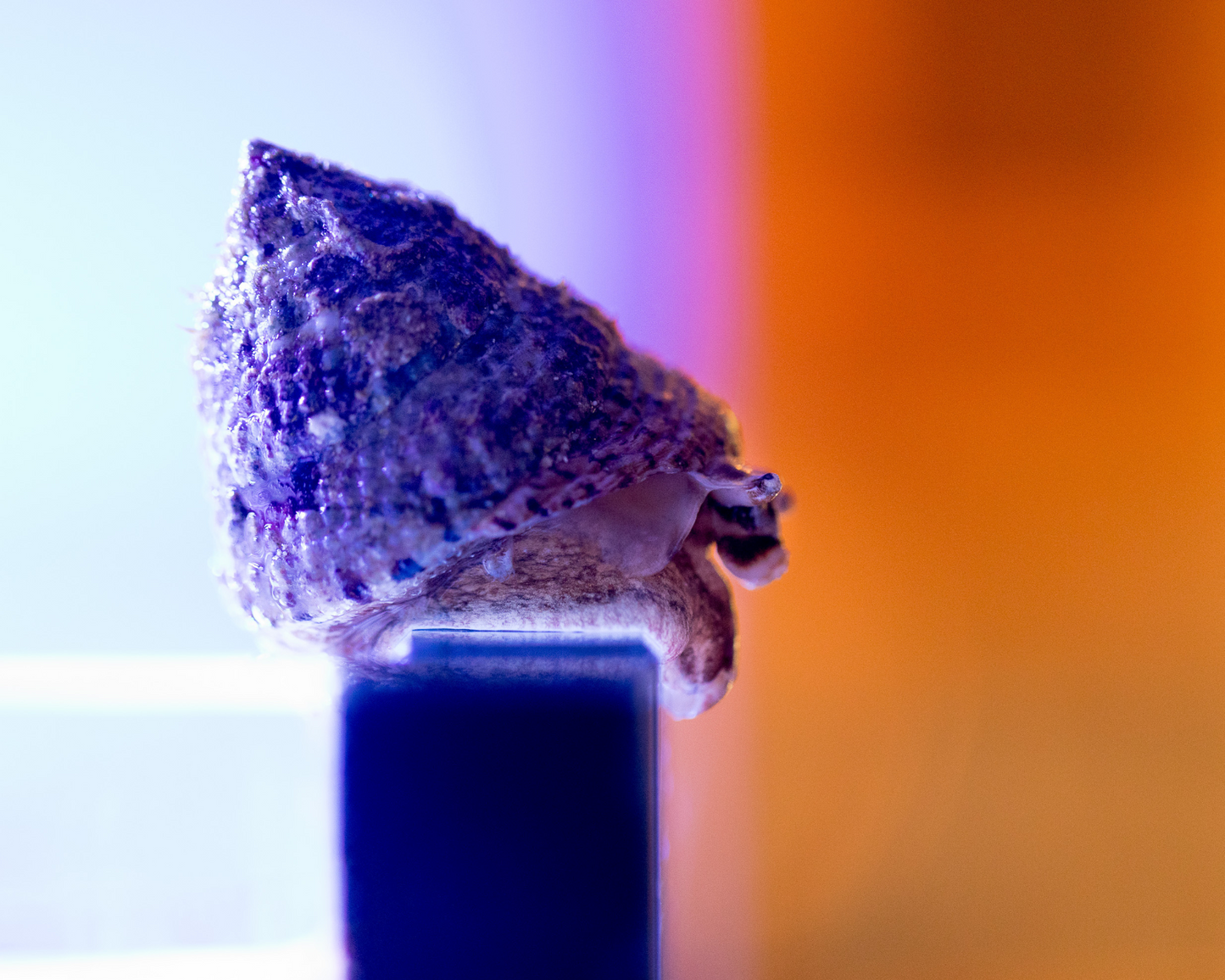
Trochus snails are often hailed as one of the best snails for reef aquariums when it comes to algae control. They have a cone-shaped, banded shell (usually brown and white) and a black, fleshy foot. Trochus are primarily nocturnal grazers, but they will roam during the day as well, methodically scraping algae off surfaces. An especially nice feature is that they can right themselves if they fall over – a big advantage over some other snails.
In the aquarium, Trochus snails stick to hard surfaces. You’ll find them on rocks, glass, and overflow boxes, feasting on biofilm and algae, but they typically avoid burying in sand. They are voracious herbivores that consume a wide range of nuisance growth, including film algae, diatoms, and even some hair algae. Because of this, they play a key role in nutrient control by eating algae before it can decay. Trochus are generally hardy and long-lived (often several years with good care), making them suitable for beginners and experienced reefers alike. They breed in some tanks by broadcast spawning, so you may even spot baby snails over time.
Trochus are reef-safe and peaceful – they won’t bother corals or other inverts. In fact, they tend to mind their own business, cruising the rocks and glass and leaving a trail of clean surface behind. They coexist well with other herbivores and tank mates, but avoid housing them with predators like pufferfish, triggerfish, or certain wrasses that might view snails as snacks. One consideration: Trochus snails can grow up to ~2–3 inches, so larger ones might bulldoze loose coral frags if they aren’t secured. It’s best to ensure corals are stable, just in case an enthusiastic Trochus plows through. Also, don’t add too many Trochus for your tank size – a common guideline is about one per 5 gallons to start, so they each have enough algae to graze without starving.
Quick facts – Trochus Snail:
- Habitat Zone: Rocks and glass (rarely on sand); excellent climbers that sometimes reach even powerheads.
- Diet: Primarily algae (microalgae films, diatoms, and some hair algae) and occasional detritus. They often leave tougher nuisance algae alone, so don’t expect them to eradicate all hair algae single-handedly.
- Care Level: Easy. Acclimate slowly to avoid sensitivity to water changes. They prefer established tanks with steady algae growth. One per 5–10 gallons is a good starting density.
- Compatibility: Very good. Completely reef-safe and peaceful. Avoid aggressive snail-eaters (triggerfish, puffers, etc.). They can right themselves if knocked over, which reduces mortality
- Pros: Hardy algae grazer that devours film algae and diatoms on rocks and glass, helping prevent outbreaks. Self-righting ability means fewer deaths from being flipped. Often breeds in captivity, contributing to a self-sustaining cleanup crew.
- Cons: Larger Trochus can knock over unsecured frags or rocks due to their size and strength. If the tank runs low on algae, they require supplemental feeding (nori or algae wafers). Not typically effective on very long hair algae (they prefer shorter growth).
Cerith Snails (Cerithium spp. – Sand-Sifters and Scavengers)
Cerith snails are small, elongated snails with spiral shells, usually only an inch or less in length. Don’t let their size fool you – ceriths are must-have cleanup crew snails because they tackle a bit of everything. These little guys originate from sandy shallows (Caribbean and Pacific) and spend a lot of time partially buried in sand in our tanks. By day, you might only see their siphon tubes poking out of the substrate; by night, they emerge to scour the sand, rocks, and glass for food.
In a reef tank, cerith snails are omnivorous opportunists. They will eat diatom algae, cyanobacteria films, and green film algae on rocks, and they eagerly consume detritus (fish waste, decaying matter) and uneaten fish food. In fact, ceriths even consume fish poop – a rather unglamorous job, but one that helps keep your tank clean! By plowing through detritus and algae, they help reduce nutrient buildup that could fuel algae blooms. Ceriths also burrow into the sand bed, aerating it as they move and preventing dead spots. This sand-stirring behavior is great for the tank’s health and makes ceriths very popular for maintaining live sand.
Cerith snails are easy to care for and quite hardy. They adapt well to a range of conditions and are considered very peaceful. Because they often hide in the sand during the day, beginners sometimes think their ceriths have “disappeared,” but rest assured they are likely snoozing or digging through sand by daylight. At night, you may find a surprising number of them crawling on the glass after lights out. Ceriths breed readily in mature tanks – you might spot their sesame-seed-like egg spirals on the glass, though baby survival varies (many eggs get eaten or skimmed out).Even so, hobbyists occasionally end up with growing cerith populations, which is a bonus.
These snails are completely reef-safe and rarely bother any tankmates. Their small size, however, means large hermit crabs might attack them for their shells (keep plenty of spare empty shells to discourage hermits from targeting live snails). Predatory wrasses or crabs could also view them as snacks, so use caution if you keep snail-eaters. For most standard reef setups, cerith snails pose no compatibility issues – they mind their business cleaning nooks and crannies. They do well in groups; a common recommendation is ~1 per 2–3 gallons, or a handful in small tanks to start, since they contribute a lot despite their size.
Quick facts – Cerith Snail:
- Habitat Zone: Sand bed and rock crevices. Often buries in sand during daylight, which helps aerate the substrate. At night or when food is detected, they’ll also climb rocks and glass.
- Diet: Omnivorous scavenger. Eats film algae (diatoms, slime algae) and detritus including uneaten food and fish waste. They even nibble on hair algae and cyanobacteria patches, making them versatile cleaners
- Care Level: Very easy. Hardy and tolerant of different water conditions (best in established tanks with biofilm to eat). They often reproduce in captivity, increasing their numbers over time. Provide plenty of sand for burrowing.
- Compatibility: Excellent reef tank citizen. Peaceful and reef-safe. Beware large hermits or predator fish that could prey on small snails. Otherwise, they won’t bother corals or other inverts.
- Pros: Stirs and aerates sand by burrowing, preventing compacted “dirty” sand. Consumes a wide range of organics (algae, detritus, leftover food), contributing to both algae control and cleaner water. Hardy and may self-reproduce, bolstering your cleanup crew naturally.
- Cons: Small size means they can get lost in big tanks (and might get sucked into pump intakes if not protected). They are mostly nocturnal, so you might not visibly appreciate their work during the day. Also, their eggs usually don’t survive in community tanks (so populations might not explode without intervention).
Nassarius Snails (Nassarius spp. – Detritus Devourers)
If you have a sandy substrate, Nassarius snails are the perfect cleanup crew members for keeping it clean. These snails are small (usually under 1″) with a pointed spiral shell, and they spend most of their time buried just under the sand surface. Nassarius are carnivorous scavengers, not algae eaters. Instead of scraping rocks, they lie in wait under the sand until they smell food – then they dramatically emerge like tiny zombies rising from the grave to grab any meaty morsels. This feeding frenzy is actually fun to watch: drop a bit of frozen shrimp or see some fish food hit the bottom, and suddenly a swarm of nassarius snails pops out of the sand and zooms around looking for the feast!
In practical terms, Nassarius snails are invaluable for consuming detritus and uneaten food before it rots. They will eat leftover fish food, dead animal matter, and other organic debris that accumulates on the sand bed. By doing so, they help prevent waste from decomposing and fouling the water. They also keep the top layer of sand stirred as they burrow and move, which helps oxygenate the substrate and avoid spots of hydrogen sulfide buildup. However, note that Nassarius do not eat algae (despite sometimes being mis-labeled as algae snails) – if you see one on the glass, it’s likely looking for a meaty bite, not grazing algae. In fact, if you find your Nassarius climbing the glass or rocks frequently, it could be a sign they’re hungry due to insufficient food in the sand.
These snails are quite hardy and easy to keep as long as they have something to scavenge. In a very sterile or new tank with little detritus, they might require target feeding (e.g. occasional sinking pellets or frozen food pieces) to stay healthy. They are best added to established tanks that get regular fish feedings so there’s detritus for them. A deep sand bed (1–2 inches or more) is ideal so they can fully bury themselves. They are fast movers when they sense food and can rapidly clean up a fish’s messy eating.
Compatibility is generally great: Nassarius are reef-safe and won’t touch live corals or algae. They keep to themselves under the sand. You can keep many of them together; they don’t bother each other. Like ceriths, their main threats are predators – certain sand-sifting fish (like large wrasses) or predatory snails (like whelks or crown conchs) can be mistaken for Nassarius but will actually prey on them. Ensure you actually have true Nassarius species (which are harmless and beneficial). A popular variety is the “Super Tongan Nassarius,” a larger species (~1″) that can tackle bigger tanks. Aim for about 1 Nassarius per 2–3 gallons in well-fed tanks, though you can adjust based on how much excess food your system produces.
Quick facts – Nassarius Snail:
- Habitat Zone: Sand bed specialist. Lives buried under sand and comes out mainly when food is detected. Will also explore rock crevices in search of carrion or leftover food
- Diet: Scavenger (carnivore). Feeds on detritus, leftover fish food, and dead organic matter. Does not eat algae or clean film off surfaces. They are essentially tiny carrion eaters keeping the tank tidy.
- Care Level: Easy, provided the tank has a constant source of edible detritus. In a tank with few fish or very clean feeding habits, supplement their diet with the occasional sinking pellet or meaty treat. They prefer a soft sand substrate to burrow in.
- Compatibility: Very reef-safe and community-friendly. They won’t bother live snails (they only seek dead flesh) and ignore corals/fish. Do not mix with known snail predators or aggressive hermits that might kill them. They are best in tanks without large sand-disturbing fish that compete for the same food.
- Pros: Excellent sand stirrers – they keep your sand bed from accumulating gunk by consuming it and by their burrowing action. They quickly remove decaying matter (fish food, dead critters) before it can pollute the tank. Their sudden “zombie snail” feeding response is entertaining and assures you that your sand has been scavenged.
- Cons: Zero algae-eating capability – they won’t help with algae control (so you’ll need other snails for that!). If your tank is extremely clean or new, they may starve without supplemental feeding. Also, if overstocked, they can exhaust the available detritus and then go hungry.
Astraea Snails (Astraea tecta – Algae Eaters with a Twist)
Astraea snails (often spelled Astrea in the hobby) are another popular algae-eating snail known for their turbo-like appetite and their slightly frustrating “Achilles’ heel.” These snails have a beautiful conical shell with ridges – some say it looks like a little turban or a star-like pyramid. They typically stay around 1 inch in size. In the wild and in our tanks, Astraea are rock grazers. They excel at cleaning rock surfaces and aquarium glass of various algae, including green film algae, diatoms, and even bits of hair algae. Many hobbyists add Astraea specifically to combat hair algae on live rock, as these snails will happily mow down shorter hair algae and get into crevices where other grazers (like tangs or sea urchins) might not reach.
In a reef tank, Astraea snails will spend most of their time on rocks and tank walls. They appreciate a lot of rockwork to explore and graze, and they like hiding spots to tuck into when resting (they can wedge into holes in rock quite well). They generally do not venture onto the sand bed on purpose – if you find one on the sand, it likely fell from the glass or rock. This leads to the infamous con of Astraea: they struggle to right themselves if flipped over. Their shell shape and relatively small foot make it difficult for them to turn upright once on their back. In nature this might not be a big issue (they live in rocky areas where they can grab something), but in an aquarium, an upside-down Astraea on the sand can eventually die if not helped. Worse, if they remain upside down too long, crabs or fish might start eating their exposed foot. For this reason, aquarists need to periodically rescue overturned Astraea snails – something to keep in mind especially if you have a lot of open sand or if these snails climb high on the glass and fall.
Despite this flaw, Astraea snails are excellent algae cleaners. They have a “larger appetite” than smaller snails like ceriths, and will eagerly graze on microalgae and even problem algae like fuzzy hair algae or film that other snails ignore. They’ve even been observed eating some forms of cyanobacteria film off rocks when hungry (as a bonus). One Astraea can clear a surprising patch of algae in a day. They are also known to consume algae that grow in tight spots – for example, algae that form on frag plug bases or between coral polyps. Many reefers consider them a cheaper alternative to turbo snails for algae control, as Astraea are smaller and less likely to bulldoze things.
Astraea are reef-safe and peaceful. They won’t bother corals; in fact, they often clean around the bases of corals which can be beneficial. They do need careful acclimation to warmer reef tanks if they were collected from cooler waters (certain Astraea species, like the “Mexican” Astraea, can handle tropical temps once acclimated). Give them a slow drip acclimation to be safe. Ensure your tank has plenty of algae or film for them – if the tank is too clean, you’ll need to supplement feed with algae wafers. Aim for roughly 1 per 5 gallons, similar to Trochus, but you can adjust based on algae availability.
Quick facts – Astraea Snail:
- Habitat Zone: Primarily on live rock and aquarium glass. They prefer hard surfaces and will graze even in tight gaps on rock. Provide ample rock surface and hiding spots. They rarely intentionally go on sand (they don’t burrow or sift).
- Diet: Herbivorous. Eats green algae films, diatoms, and some hair algae (prefers short turf; long hair algae strands may be left behind). Will also eat some nuisance red slime (cyanobacteria) and brown films. Essentially, they’re all-around algae munchers, great for cleaning rocks.
- Care Level: Moderate. While hardy, they require a bit of vigilance due to their inability to self-right if flipped They need a slow acclimation and do best in well-established tanks with lots of algae growth. They tolerate reef temperatures well once adjusted
-
Compatibility: Reef-safe and peaceful with all tankmates except potential predators (e.g., avoid housing with predatory snails or crabs that might prey on them). Monitor them for falls – if one falls on its back on sand or a flat surface, flip it right-side-up to save its life.
- Pros: Voracious algae eater – great at cleaning live rock of film and filamentous algae Helps with algae in crevices and on equipment. Smaller and lighter than turbo snails, so less likely to bulldoze heavy aquascape. Readily available and affordable.
- Cons: Cannot flip themselves upright, so they rely on you (or luck) to get back up if they topple. If not righted, they can die and foul the water or be eaten by opportunistic hermits. They may require longer acclimation if collected from non-tropical habitats. Also, they don’t usually breed in captivity, so populations won’t increase naturally (you’ll need to purchase replacements if they die off).
Turbo Snails (Turbo spp. – Heavy-Duty Algae Mowers)
When algae problems get out of hand, many reef keepers call in the “big guns” – Turbo snails. The most well-known is the Mexican Turbo (Turbo fluctuosa), a larger snail with a thick, turban-shaped shell that can reach 2 inches in diameter. Turbo snails are famous (or infamous) for their voracious appetites and bulldozer-like strength. They will consume astonishing amounts of algae, including things most other snails won’t touch. A single Turbo can polish off patches of green hair algae and even stubborn turf algae in a short time. They are like living lawnmowers for your reef.
In the aquarium, Turbo snails prefer hard surfaces – live rock and tank walls – where algae grows for them to graze. They methodically use their rasping tongue (radula) to scrape algae off rocks, leaving clean white tracks behind. Unlike some smaller snails, Turbos have the power to tackle filamentous algae (hair algae) and even macroalgae growth. They will happily devour film algae and diatoms as well. This makes them incredibly useful if you’re battling a hair algae outbreak; in fact, Mexican Turbos are often recommended as one of the best saltwater snails for algae control in an emergency. However, once the easy food is gone, you must be prepared to feed them, as their big appetite means they can starve in a tank that’s too clean or too small.
Turbo snails are generally hardy, but they have a few special care notes. Firstly, many come from subtropical areas (e.g., Baja California) where waters are a bit cooler. They can live in tropical reef temperatures, but extremely high temps (over 80°F) might shorten their lifespan. Many reefers find their Turbo snails last 1-2 years, which is a bit shorter than some other snails – possibly due to temperature or just their natural lifespan. Secondly, Turbos are big and strong: they’ve been known to knock over rocks, corals, and unsecured aquascape pieces with their bulldozing movement. You’ll want to secure any fragile or top-heavy corals before introducing a large Turbo. The common saying is “they’re like bulls in a china shop,” so plan accordingly. Due to their size, you also don’t need many – one good-sized Turbo per 20–30 gallons is usually plenty
Compatibility is similar to other snails: they are reef-safe herbivores and won’t bother tankmates. Just avoid predatory fish that eat snails. If a Turbo dies, remove it quickly; because of their bulk, a dead Turbo snail can release a lot of nutrients and foul a small tank quickly. On the plus side, Turbo snails can sometimes right themselves if they fall (their foot is quite large), but if they fall into a crevice or on their shell apex, they might need assistance. It’s less of an issue than with Astraea, but still keep an eye out.
Quick facts – Turbo Snail:
- Habitat Zone: Rocks, glass, and other hard surfaces. They are active climbers (even onto powerheads or overflow boxes) and rarely stay on sand by choice. They need lots of algae-coated surface area to graze.
- Diet: Almost exclusively herbivorous. Eats large amounts of algae, including green hair algae, turf algae, film algae, diatoms, and even some macroalgae growth. They will also graze nuisance cyanobacteria lightly. They do not need (or want) meaty foods.
- Care Level: Moderate. Require a tank with sufficient algae to support them or willingness to supplement feed (dried seaweed/nori sheets are a great backup food). Best in tanks 30 gallons and up due to their size and food needs. . Acclimate to temp and avoid very high temps if possible.
- Compatibility: Reef-safe, won’t bother corals. Keep only a few – one large Turbo can clean 25+ gallons of rockwork easily, and too many may starve or strip the tank of desirable algae (including decorative macroalgae). Secure loose rocks or frags to prevent accidental toppling. Remove promptly if one dies.
- Pros: Consumes massive amounts of algae, making quick work of algae outbreaks. Great for hair algae and other types smaller snails struggle with. Fairly hardy and long-lived if well-fed. Their larger size means fewer individuals can cover more ground.
- Cons: Bulldozer tendency – they can knock over corals and rock due to strength and size. Can be short-lived in very warm tanks (the Mexican Turbo is somewhat temperate and might only live a couple of years in tropical conditions). If they exhaust the algae supply, they require manual feeding or will starve. Not ideal for nano tanks (they’re too big and strong).
Fighting Conch (Strombus alatus – Sandbed Powerhouse)
Conchs are unique among snails – these sand-dwelling mollusks have a sturdy conch shell and a big personality, with long eye stalks that gaze about and a trunk-like proboscis they use to dig and feed. The Fighting Conch, despite its name, is quite peaceful in aquariums (the name comes from males occasionally sparring in the wild). This conch grows to around 3–4 inches in length as an adult and sports a heavy, conch-shaped shell. It is an ideal addition for larger reef tanks with deep sand beds, as it spends nearly all its time on or in the sand, keeping the substrate clean and stirred.
A fighting conch will cruise the sand bed constantly, plowing through the top layer of sand in search of food. They are omnivores: they consume a mix of detritus, bits of leftover food, and algae growing on the sand (like diatom films or microalgae on the sand grains). In effect, they vacuum the sand surface, picking up any edible material. This helps prevent detritus buildup in the sand and also helps control sand-based algae. If you have visible brown diatoms or film on your sand, a fighting conch can often reduce it by eating it or turning the sand over. Because of their diet, they contribute significantly to nutrient export – all that detritus and algae they eat becomes conch waste that is easier for your filtration to handle.
Fighting conchs require a sand substrate (about 2+ inches deep is recommended) and open sand area to roam. They will occasionally bury themselves, especially if startled or “sleeping,” but often you’ll see them pushing along the sand like a tiny bulldozer, using their pointed operculum to push and hop. Ensure your rockwork is stable; conchs can dig under rocks potentially. Also, make sure any intake pumps near the sand are guarded – conchs are strong and can climb glass a little bit, but usually stay low. In terms of care, fighting conchs are relatively hardy if their feeding needs are met. The biggest concern is starvation in tanks that are too small or too clean. They have large appetites and can clean a small sand bed very quickly.
In tanks under ~30 gallons, a fighting conch may exhaust its food source unless supplemented. If your conch is roaming onto rocks or glass frequently, it may be searching for food because the sand is too clean (they sometimes climb when hungry, which is unusual for them). In such cases, you might offer it a sinking pellet or blanched veggie to munch. Generally, one fighting conch is plenty for most tanks (and it’s best to keep single individuals unless you have a very large tank, as they may fight with others of the same species in close quarters)
Compatibility is straightforward: fighting conchs are reef-safe and won’t bother live animals. They might occasionally jostle very small snails or hermits on the sand just by bumping, but they are not aggressive. The only “fighting” behavior is between conchs (males can tussle), so stick to one per tank unless you have a big space. Predators that eat snails, like certain crabs or large carnivorous snails (e.g., crown conch which is often confused with fighting conch), could harm them, but those predators shouldn’t be in a reef tank anyway. Watch out for hermit crabs – a large hermit might kill a conch for its shell or out of opportunism (there are reports of hermits attacking conchs). Using caution with hermit crab size and providing empty shells can mitigate this.
Quick facts – Fighting Conch:
- Habitat Zone: Sand bed specialist. Needs an ample area of sand to roam and at least a few inches of depth to burrow. Will not climb rocks much (except if hungry, which is a sign to observe). Ideal for tanks with live sand beds that need cleaning.
- Diet: Omnivore scavenger. Eats detritus, organic matter, and algae off the sand. This includes diatoms, film algae on sand, leftover food that lands on the bottom, and even nuisance algae like turf or hair that it can reach on the lower rocks. Requires a consistent food source in the sand.
- Care Level: Moderate. Easy to keep if food is present, but can starve in tanks that are too “clean” or too small. Best in mature tanks (30+ gallons) with established sand fauna and detritus. Provide supplemental feeding in newer tanks. They also prefer stable water parameters (like other inverts, they don’t tolerate copper or spikes in nitrate).
- Compatibility: Reef-safe with corals and fish. Generally keep one per tank (males may spar if more than one in a confined space). Avoid predatory tankmates. Monitor large hermit crabs if present. A healthy conch will often avoid trouble by staying buried when threatened.
- Pros: Fantastic sand cleaner – continually sifts and aerates the sand, preventing waste buildup and unsightly algae on the sand bed. Consumes detritus that other CUC members ignore, thus improving overall water quality. Very interesting to observe (they have eyestalks and a quirky hopping movement). Long-lived when well-fed, potentially lasting for years.
- Cons: Needs appropriate environment – a big enough tank with a sand bed full of food. In small or low-nutrient tanks, it may require you to target feed or it will starve quickly. Can grow relatively large, so its shell might knock into frags or small ornaments on the sand (secure any delicate items). If it dies, its large size can cause a nutrient spike, so remove it promptly (though they are hardy, so this is uncommon if well cared for).
Rare and Exotic Snails for Advanced Hobbyists
Beyond the common cleanup crew snails, there are some unusual snail species that seasoned reefers might consider. These rare or exotic saltwater snails often have specialized diets or care requirements, so they’re best suited for advanced hobbyists or specific tank setups. They can offer unique benefits – from eating particular pests to simply adding an uncommon visual appeal. Below are a few hidden gems in the snail world:
Bumblebee Snails (Engina mendicaria) – Striped Sand Cleaners
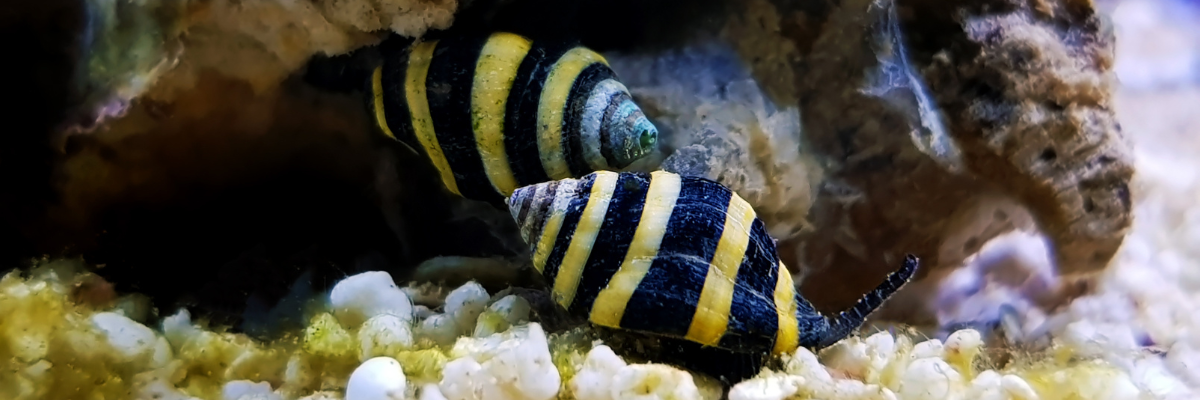
Bumblebee snails are tiny (around 1/2 inch) snails with a striking black-and-yellow banded shell, just like a bumblebee. They are carnivorous scavengers that live in the sand and rock crevices. Bumblebees are often added to reef tanks for detritus control and pest management. They will prowl your sand bed and rockwork at night, hunting for bits of detritus, uneaten food, and even nuisance worms. In fact, bumblebee snails have a reputation for preying on problem vermetid snails and pyramidellid snails (parasites on clams) – making them a sort of biological pest control in some cases. They also consume small amounts of algae or biofilm, but do not expect them to reduce algae much (despite some claims); their main diet is meaty debris and micro-fauna.
What makes bumblebee snails “advanced”? Mainly their feeding habits – because they won’t graze on algae much, they need an established tank with plenty of microscopic critters and detritus to feed on. In a very clean tank, they could starve. Some reefers have found that if bumblebees run out of natural food, they might irritate corals (possibly searching for mucus or other organics). This can be mitigated by supplementary feeding (e.g., tossing in a pinch of mysis or pellet at lights out for them). They thrive best in mature tanks with deep sand beds full of life.
Bumblebee snails are entirely reef-safe in terms of not attacking healthy coral or fish. They stay small and won’t knock things over. They are nocturnal and hide during the day, often buried or in rock cracks. A cool fact: they can help keep sand beds from forming anaerobic zones by burrowing (though not as much as ceriths or nassarius do). They also add a pop of pattern to your tank if you spot them on the glass or rock – their bold stripes are quite attractive.
Benefits: Great for consuming detritus in hard-to-reach spots, helping maintain sand bed health. May prey on certain unwanted pests like vermetid snails or bristle worms, providing a natural control method. Very hardy and long-lived in established systems.
Unique requirements: Needs a “dirty” tank (in terms of micro fauna) – best added to tanks with lots of live rock and sand crawling life. If your tank is very clean, plan to spot feed them periodically. They prefer to live in sand and rubble; a very bare-bottom tank wouldn’t suit them. Also, because of their small size, avoid keeping them with large hermits or fish that might eat them.
Lightning Dove Snails (Pyrene sp. “Lightning Dove”) – Algae Specialist for Macro Tanks
Lightning Dove snails are a newer introduction to the hobby and quite rare. They get their name from a striking lightning-bolt pattern on their shell. These snails stay small (around 1″ or less) and are excellent film algae grazers that have a special niche: they are safe to keep in tanks with macroalgae. Many algae-eating snails might devour decorative macroalgae, but lightning doves reportedly focus only on film algae, hair algae, and cyanobacteria, leaving higher macroalgae alone. This makes them ideal for reefers who have planted refugiums or display macroalgae tanks and need algae cleanup without risking their plants.
Lightning Dove snails behave a bit like a cross between ceriths and trochus. They will crawl on rocks, glass, and even sift through the top of sand looking for algae films. Unlike heavier snails, they are very delicate movers – they won’t bulldoze or disturb corals while grazing. They stay on the small side and reproduce in captivity (to some extent), though still considered exotic so not much breeding info is out yet.
Benefits: Fantastic at cleaning up nuisance algae and cyanobacteria in reef tanks where you might not want larger snails. They are light-footed and safe around frags and delicate aquascapes (no toppling issues). Also, their macroalgae-safe diet is a unique plus for certain setups.
Unique requirements: Because they are newly available, ensure you get them from a reliable source (Pod Your Reef is one of the few offering them). They should be acclimated slowly and need a source of algae – so don’t put them in a spotless tank or they could starve. They prefer stable, mature systems similar to trochus. Otherwise, care is similar to other small grazers.
Stomatella Snails (Stomatella varia) – Freebie Hitchhiker Algae Eaters
Stomatella snails are often not purchased, but rather appear as hitchhikers on live rock – advanced reefers prize them if they hitchhike in. They look like small, oval snail/slug hybrids (often black or mottled) with a very low-profile shell. Stomatellas are extremely efficient algae grazers that breed prolifically in tanks. They come out mostly at night and glide over rocks and glass eating film algae and diatoms. Many experienced hobbyists consider them one of the best “invisible” cleanup crew members because they tend to multiply and sustain their population with no intervention.
While not sold in stores typically, a thriving stomatella population is a sign of a mature, healthy tank. If you are lucky to get some, protect them – some fish (like wrasses) or hermits might eat them. Otherwise, they require no special care. They are an example of an “exotic” beneficial snail you might already have without knowing it!
Benefits: Excellent at grazing algae in tight spots, reproduce on their own, and do not topple anything due to their small size and slug-like movement. They keep rock surfaces clean and their population adjusts to available food.
Unique requirements: None beyond what a typical reef provides. Just need protection from predators. They usually only come in on live rock, so in a dry-rock tank you wouldn’t have them unless you seed them from another hobbyist.
Abalone Snails (Haliotis sp.) – Voracious Algae Vacuum (Advanced)
An abalone is not a snail in the typical sense (it’s a mollusk with a flat, ear-shaped shell), but in reef tanks they function similarly to snails by eating algae. They are voracious film algae and macroalgae eaters, capable of cleaning large areas of rock quickly. Abalones, such as the tropical donkey-ear abalone (Haliotis asinina), can be kept in reef tanks by advanced aquarists. They get fairly large (several inches) and have a muscular foot that clings tightly to surfaces – they can even climb glass. Abalones have been known to chew through thick algal films and even nuisance macroalgae.
However, their size and strength comes with caveats: a big abalone can bulldoze rocks and scratch acrylic tanks if it drags its shell along the acrylic (the tropical species H. asinina is reported to not scratch acrylic as much, but caution is needed). They also require a lot of food – big tanks with continuous algal growth or lots of supplemental feeding (seaweed sheets) are a must. They are quite hardy if well fed, but not commonly available.
- Benefits: Consumes enormous amounts of algae; an abalone can be like a living algae scrubber, keeping rocks pristine. Unusual and attractive (the iridescent shell underside is beautiful, though you mostly see their drab top shell in the tank).
- Unique requirements: Large tank, lots of algae. Must secure aquascape due to their strength. Use only in glass tanks or be cautious in acrylic (depending on species). Only for very advanced keepers due to feeding needs and size.
These rare snails can be rewarding additions, but always research each species thoroughly. Some, like bumblebees and lightning doves, are becoming available through specialty vendors (often aquacultured or sustainably collected), giving hobbyists more options beyond the standard cleanup crew. Adding one of these hidden gems can enhance your reef’s biodiversity and tackle specific cleanup challenges that common snails might not address. Just be mindful of their unique care so that these special snails can thrive.
Conclusion
Saltwater snails truly are cleanup crew superstars in reef tanks – each type brings its own strengths to the table. By mixing species like algae-grazing Trochus and Astraea with detritus-eating Nassarius and sand-sifting Ceriths or Conchs, you achieve a balanced, highly effective cleanup crew that keeps all parts of your reef aquarium healthy. We’ve highlighted the best saltwater snails for algae control (such as Trochus and Turbo for rocks and glass, and conchs for sand algae) as well as those that handle leftover food and waste (like Nassarius and bumblebee snails).
Remember that even the best snails need the right conditions: give them plenty to eat, acclimate them well, and protect them from hazards (like being flipped over or attacked by predators). In return, they’ll work around the clock – mostly unseen – to maintain your reef tank. If you’re a beginner, start with the hardy staples and add exotic snails cautiously as you gain experience. Advanced hobbyists can experiment with those hidden gems to target specific issues or simply to enjoy something out of the ordinary.
Incorporating a diversity of snails not only keeps algae in check and recycles waste, but also adds an interesting layer of activity to your reef. From the daylight grazers to the nocturnal scavengers, there’s always something happening as these invertebrates perform their janitorial duties. Next time you admire your crystal-clear glass or spotless sand, you might just have your snail crew to thank! So, whether you’re battling algae or just being proactive in maintenance, consider these shelled helpers – and don’t forget to check out sustainable sources like Pod Your Reef for captive-bred and ethically sourced snails to stock your very own cleanup crew superstars. Happy reefing!